

Blog · Interior Painting
Which Paint Sheen Should You Use in Each Room?
By the Hollywood Carpentry & Painting team, Bellingham, MA · MA HIC #212730
Published · 7 min read
Short answer
A common approach is flat or matte on ceilings, eggshell or matte on living-area walls, satin in kitchens, bathrooms, hallways and kids' rooms, and semi-gloss on trim and doors. The trade-off is simple: lower sheens hide wall imperfections better, while higher sheens are easier to wipe clean but show every dent and patch. The right choice also depends on the specific product, because sheen names are not standardized between brands.
Key takeaways
- Lower sheen hides flaws; higher sheen cleans more easily.
- Ceilings almost always look best in flat or matte.
- High-traffic and humid rooms benefit from satin.
- Trim and doors usually get satin or semi-gloss for durability.
- Sheen levels vary by brand, so compare actual samples, not names.
What is the difference between flat, eggshell, satin and semi-gloss?
They describe how much light the dried paint reflects, from almost none (flat) to noticeably shiny (semi-gloss and gloss).
Flat and matte paints reflect very little light, so they look soft and hide small dents, roller texture and patched areas well. Eggshell has a slight glow and is a popular middle ground for walls. Satin has a visible soft sheen and holds up better to wiping. Semi-gloss and gloss are clearly reflective and are used where surfaces get handled and cleaned often.
There is no industry-wide measurement that every brand uses for these names. One manufacturer's eggshell can be closer to another's satin. That is why it is worth looking at a painted sample of the actual product you are choosing, in the room, at different times of day.
Which sheen should you use in each room?
Match the sheen to how the room is used: low sheen where looks matter most, higher sheen where cleaning and moisture matter most.
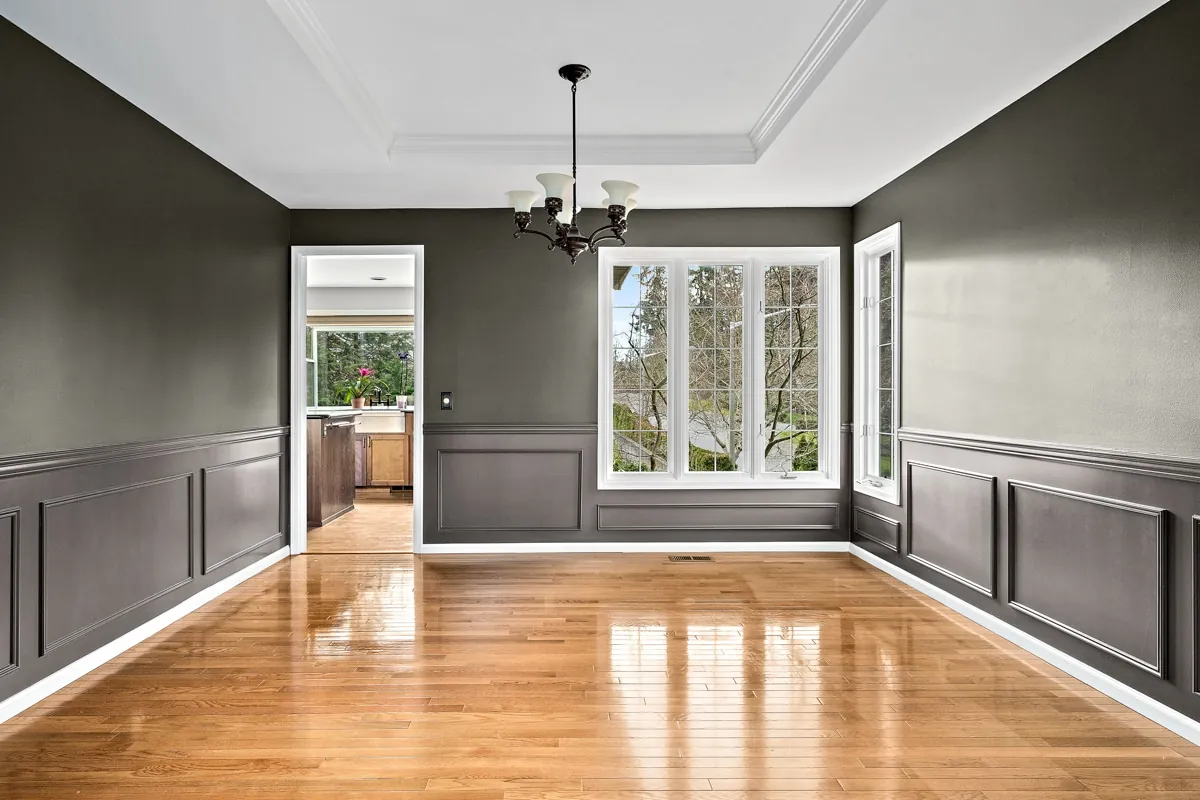
Living rooms, dining rooms and bedrooms usually get matte or eggshell walls, because they are touched less and a softer look flatters the space. Kitchens, bathrooms, laundry rooms, mudrooms and hallways take more abuse and moisture, so satin is a common choice there. Children's rooms often benefit from satin or a scrubbable matte product designed for washability.
Ceilings are almost always flat. A shiny ceiling reflects every light fixture and shows roller lines and drywall seams. Trim, doors and window casings usually get satin or semi-gloss, both for durability and to create a subtle contrast with the walls.
For the bigger picture, read our guide: How Much Does Interior Painting Cost per Room in Massachusetts?
Why do higher sheens show more imperfections?
Because reflective paint bounces light off every bump and dip, making patched or uneven areas stand out.
In older Massachusetts homes, plaster walls and long-patched drywall are rarely perfectly flat. A semi-gloss wall in raking light will show every repair. That is why surface preparation and sheen choice go together. If walls have many repairs, a lower sheen is more forgiving; if you want a higher sheen, more preparation is needed to get the surface flat first. Our post on repairing plaster before painting covers that preparation.
Can you change sheen when repainting?
Yes. Going lower or higher is possible, but glossy surfaces need preparation so the new paint bonds.
Painting a lower sheen over a semi-gloss wall or trim requires cleaning and scuff-sanding, and sometimes a bonding primer, so the new coat does not peel. Going from flat to a higher sheen usually needs full coats rather than spot touch-ups, because touch-ups on higher sheens tend to flash, meaning they look shinier or duller than the surrounding area.
Which sheen is easiest to touch up?
Flat and matte are usually the easiest to touch up invisibly.
Touching up a small mark on a flat wall often blends in. On satin and semi-gloss, touch-ups can show as a patch of different shine, so repairs on those finishes are often done wall to wall or corner to corner. Keep a labeled container of each color and sheen used in your home, with the room written on the lid. It makes future touch-ups far easier.
| Surface or room | Common sheen | Why |
|---|---|---|
| Ceilings | Flat / matte | Hides seams and roller marks; no glare from fixtures |
| Living and dining rooms | Matte or eggshell | Soft look, forgiving on imperfect walls |
| Bedrooms | Matte or eggshell | Low glare, easy to touch up |
| Kitchens and bathrooms | Satin | Wipes clean and handles moisture better |
| Hallways, mudrooms, kids' rooms | Satin or scrubbable matte | Holds up to hands, bags and cleaning |
| Trim, doors and casings | Satin or semi-gloss | Durable, wipeable and adds contrast |
| Kitchen cabinets | Satin or semi-gloss cabinet coating | Hard, cleanable surface for daily use |
Before you choose sheens
- Look at painted samples on the wall in daylight and at night.
- Check how flat the walls are in raking light from windows.
- Decide which rooms need frequent cleaning.
- Keep sheens consistent from room to room where walls meet.
- Write the brand, color and sheen on each leftover can.
Planning this work? See our interior painting service for what is included, or learn how our process works from estimate to final walkthrough.
Frequently asked questions
What sheen is best for interior walls?
Matte or eggshell is a common choice for living areas and bedrooms, while satin is often used in kitchens, bathrooms and high-traffic areas.
Should ceilings be flat or matte?
Yes. Flat or matte ceilings hide seams and roller marks and avoid glare from light fixtures.
Is satin or semi-gloss better for trim?
Both work. Semi-gloss is more durable and reflective; satin gives a softer look with good wipeability.
Is eggshell the same in every brand?
No. Sheen names are not standardized, so compare actual samples of the product you are using.
Can bathrooms be painted with matte paint?
Some matte products are made for humid rooms, but satin is the more common, forgiving choice where moisture and cleaning are frequent.