

When Is the Best Time to Paint a House Exterior in New England?
Short answer
The best time to paint a New England exterior is a dry weather window when both the air and the surface meet the selected coating's application and drying requirements. Late spring through early fall can offer opportunities, but temperature, humidity, rain and dew matter more than the month. Follow the product label and technical data sheet, allow washed surfaces to dry and leave enough time before evening condensation or colder overnight conditions.
Last updated: November 2026
Written by the Hollywood Carpentry & Painting team, Bellingham, MA · MA HIC #212730
Key takeaways
- Choose the weather window and coating together, not a month alone.
- Measure surface conditions; comfortable air does not guarantee paint-ready siding.
- Let rain, washing and morning dew dry before application.
- Check humidity, overnight temperatures and the time available for drying.
- Repair unstable wood and moisture problems before applying new paint.
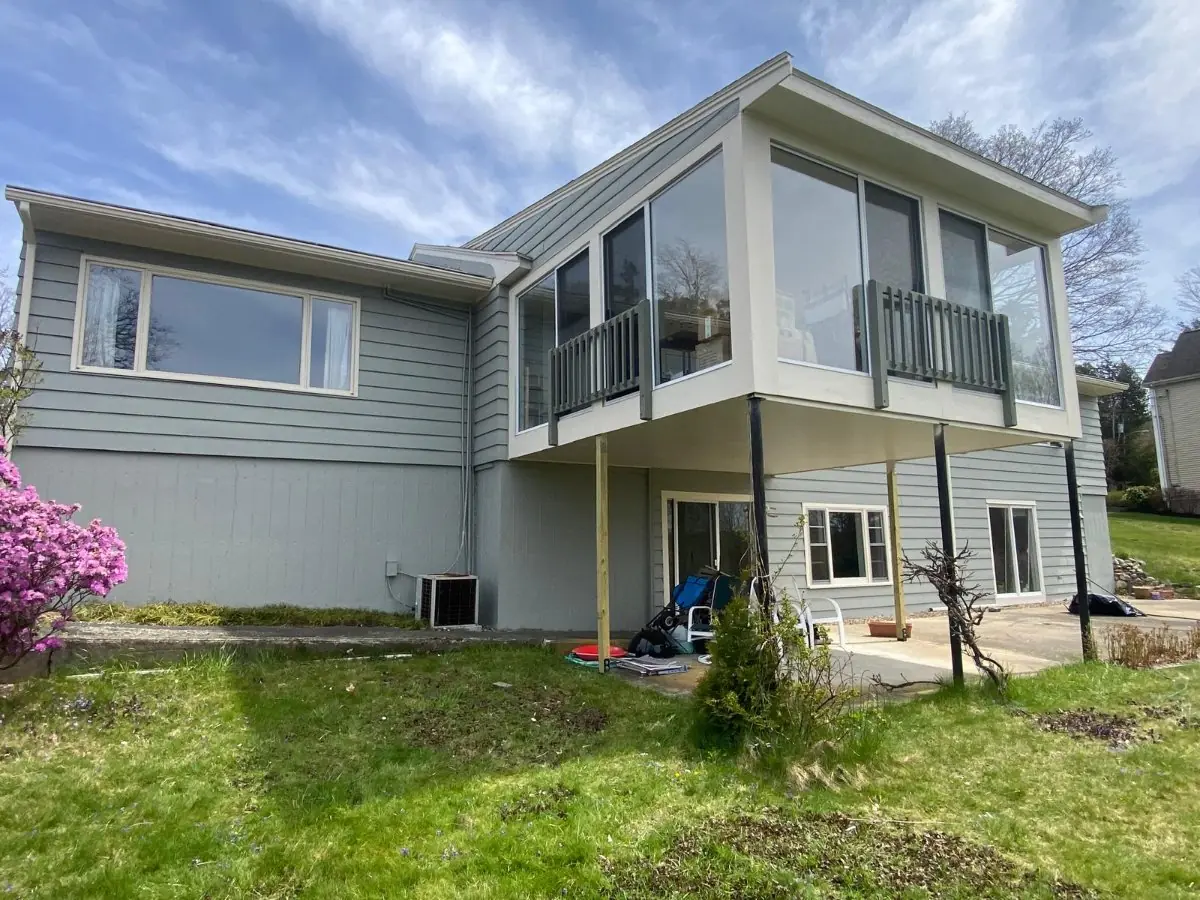
Explore our exterior painting service for the available scope. For trim, molding and built-in details, see finish carpentry.
Which season is best for exterior painting in Massachusetts?
A suitable dry window within the coating's requirements is more important than a particular season.
Late spring, summer and early fall can provide opportunities for exterior work, but none guarantees suitable conditions on a particular property. Spring moisture, intense summer sun or cooler evenings can interrupt a job even when the calendar looks favorable. Avoid treating a seasonal recommendation as local weather data or a promise that every day in that season is paint-ready.
Plan preparation and painting as separate stages that both depend on the weather. Washing needs drying time, repairs need assessment and finish coats need an appropriate application window. Hollywood Carpentry & Painting reviews exterior surfaces and repairs at a free in-home estimate and schedules around actual conditions. A flexible sequence is more useful than insisting that the entire project happen on a predetermined sunny afternoon.
How warm must the air and siding be before painting?
Both air and surface temperatures must meet the specific paint's requirements during application and the required drying period.
Minimums vary by product, so there is no single temperature that makes every exterior coating suitable. Sherwin-Williams' SuperPaint exterior latex data sheet, for example, specifies temperatures above 35°F for air, surface and material for that product. That is a product-specific example, not permission to use every paint at that temperature. Check the current label and technical data sheet for the exact coating selected.
A surface can remain colder than the air in shade or become much hotter than the air in direct sun. The temperature at lunchtime also does not describe what happens after sunset. Discuss application limits and forecast conditions during drying, including the manufacturer's restrictions on rain and falling temperatures. Do not substitute a weather app's air reading for the condition of the wall that is actually being painted.
How do humidity and dew affect an exterior paint job?
Humidity can slow drying, and dew can put moisture on a surface even when no rain is falling.
A dry forecast is not the same as a dry substrate. Morning condensation, damp shaded boards and humid air can affect preparation and coating performance. Benjamin Moore's temperature guidance advises avoiding high humidity and keeping the surface more than 5°F above the dew point to reduce condensation risk. Treat that as general manufacturer guidance and still follow the requirements of the chosen product.
Before application, check whether the wall has actually dried after dew, rain or washing. Before continuing later in the day, consider when condensation may return. Recoat instructions describe suitable conditions, not a guarantee that every coat dries at the same speed. When the coating is not ready for another application or the surface is becoming damp, waiting is part of a sound painting process rather than an unnecessary interruption.
Should painters start early in the morning or later in the day?
Start after dew has cleared and stop early enough to meet the coating's drying requirements before evening changes.
An early start only helps if the surface is ready. Damp siding in shade can remain unsuitable even when another side of the house looks dry. At the other extreme, an afternoon wall in direct sunlight can be too hot for comfortable application and can cause the coating to set before it is worked properly. The useful painting window changes with exposure and the selected coating.
Work can move around the house as shade and surface conditions change, but that sequence needs to respect preparation and recoat requirements. There is no universal clock time that applies to every Massachusetts house. Ask how the crew checks the surface and adjusts the work for the day's conditions. Plan cleanup and stopping time around drying needs, not merely around how much wall remains unfinished.
How long should siding dry after rain or washing?
Wait until the substrate is suitably dry for the chosen coating rather than using a universal waiting period.
Material, exposure, humidity and the amount of moisture all affect drying. Wood in shade may behave differently from a sun-exposed surface, and crevices or joints can hold water after the main face appears dry. The paint instructions and the substrate condition should guide the decision. We do not offer a fixed rain-to-paint countdown because it could imply readiness that the actual house does not have.
Exterior preparation may include washing, scraping, sanding, caulking and priming bare wood. Each step needs to be appropriate for the existing material and coating. Ask how dryness is assessed and whether moisture-related repairs must happen first. Moving directly from washing to painting for the sake of a short schedule is not a substitute for evaluating whether the siding is ready to receive the finish.
Why does exterior paint peel even after a repaint?
Peeling often points to moisture, unstable old coating or insufficient preparation that a new topcoat alone cannot resolve.
Moisture entering through leaks, joints or damaged wood can undermine a finish. Existing loose paint also needs to be removed rather than buried beneath another coat. Exposure to sun and seasonal changes can stress exterior surfaces, but that does not establish the cause of every failure. The condition should be investigated rather than assuming all peeling comes from the same weather event.
Our exterior service includes surface preparation and agreed wood repairs by our carpenters before painting. Point out recurring failure areas, soft trim or clapboards and any history of leaks at the estimate. Paint is not a structural repair or a waterproof cure for an active defect. A useful scope describes which boards or trim need attention, which surfaces will be primed and which areas are outside the project.
What should an exterior estimate cover before I choose dates?
The estimate should identify surfaces, repairs, access and finish choices before the weather-dependent schedule is agreed.
Walk around the house and list siding, trim, fascia, doors and shutters that need painting. Discuss decks and porches separately because their material, use and exposure can call for a different finish or preparation. Identify landscaping, walkways and windows that need protection. Access requirements and damaged areas can affect the scope without any need to invent a generic price for the property.
Hollywood Carpentry & Painting uses Benjamin Moore and Sherwin-Williams coatings on its exterior service page. Ask which product is proposed and how its requirements shape the plan. We do not publish an exterior price here; preparation, surfaces, repairs and access determine the quote, and the in-home estimate is free. If unsuitable exterior weather leaves room for other work, discuss interior painting as a separate scope rather than compromising the exterior finish.
| Condition | What to check | Reason to wait |
|---|---|---|
| Cool weather | Product-specific air, surface and drying limits | Surface or overnight conditions outside the limits |
| Sunny wall | Actual surface temperature and exposure | Surface too hot for the selected coating |
| Morning dew | Dry substrate and dew-point guidance | Condensation remains on the wall |
| After rain or washing | Substrate dryness and coating instructions | Moisture remains in wood or joints |
| Late afternoon | Time before dew, rain or falling temperatures | Insufficient suitable drying window |
What drives the price and scheduling decision?
- List siding, trim, doors, shutters and any separate deck work.
- Identify peeling, bare wood, rot and active moisture problems.
- Confirm access and protection needs around the home.
- Select the coating and review its current application instructions.
- Check air, surface, humidity and drying-window conditions.
- Agree on repairs, exclusions and weather-related schedule adjustments.
Frequently asked questions
Can exterior painting happen in early spring?
Possibly, if the surface is dry and the selected coating's application and drying requirements are met. The season alone does not establish readiness; cool surfaces and overnight conditions still need checking.
Is 35°F safe for all exterior paints?
No. The cited Sherwin-Williams SuperPaint data sheet uses that limit for a particular product. Other coatings may differ. Follow the current label and technical data sheet for the paint you actually use.
Does a sunny forecast mean siding is ready?
No. Morning dew, recent washing, shaded wood or trapped moisture can leave surfaces damp. Direct sun can also make a wall hotter than the air. Actual substrate conditions need assessment.
Should painting stop before evening dew?
The coating needs enough suitable drying time before conditions become unfavorable. Dew, humidity and falling temperatures affect that decision, so there is no universal stopping time for every product and house.
Can a new coat fix peeling caused by water damage?
No. Active moisture problems and unstable wood need attention before painting. Our carpenters assess agreed wood repairs as part of the exterior project so the finish goes onto a sound surface.
Do you offer a free exterior estimate?
Yes. We review exterior surfaces, preparation, repairs, access and finish choices at a free in-home estimate. We provide a project-specific quote rather than publish an unsupported exterior price.