

Refinish or Replace Kitchen Cabinets? How to Decide
Short answer
Refinish kitchen cabinets when the boxes are sound, the layout works and the main goal is a different color or finish. Consider replacement when the cabinet structure is failing, damage is extensive or you need a different layout or storage configuration. Compare the complete repair-and-refinish scope with the replacement scope at a free in-home estimate; we do not publish fixed cabinet prices or a guaranteed savings percentage.
Last updated: November 2026
Written by the Hollywood Carpentry & Painting team, Bellingham, MA · MA HIC #212730
Key takeaways
- Check cabinet structure and function before selecting a color.
- Refinishing keeps the boxes, layout and existing kitchen footprint.
- Replacement can address layout and construction problems that paint cannot.
- Local repairs may be compatible with refinishing, but widespread damage needs assessment.
- Compare preparation, repairs, installation and disruption, not just the appearance.
Explore our cabinet refinishing service for the available scope. For trim, molding and built-in details, see finish carpentry.
What is the difference between refinishing and replacing cabinets?
Refinishing changes existing cabinet surfaces; replacement removes the old cabinets and installs new ones.
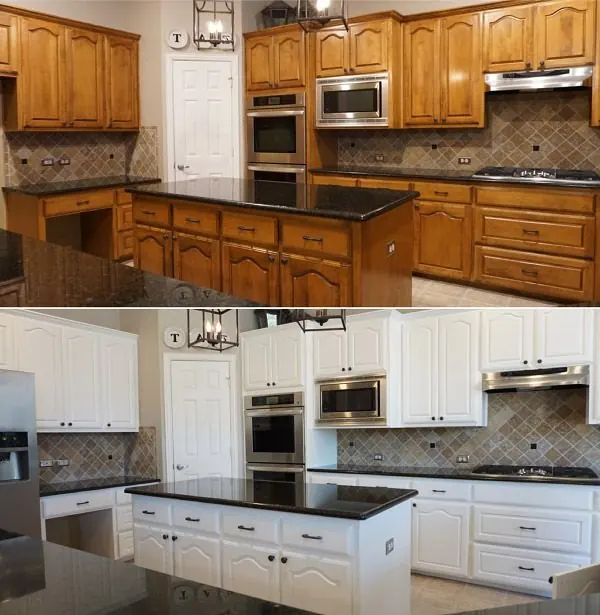
In our cabinet refinishing service, doors and drawer fronts are removed, cleaned, sanded, primed and refinished before reinstallation. Cabinet boxes stay in place, and agreed carpentry repairs happen before the new finish. That makes refinishing a way to change the appearance of a kitchen whose fundamental arrangement already suits the household.
Replacement is a different scope involving removal and installation. It may affect the relationship between cabinets, counters, backsplash and appliances, depending on the planned changes. Do not treat the two options as interchangeable products with different paint colors. First decide whether you need a cosmetic update, functional repairs or a change to the kitchen's configuration; then compare the work required to reach that result.
How can I tell whether my cabinet boxes are worth keeping?
Sound, stable boxes with usable shelves and secure joints are better refinishing candidates than failing cabinetry.
Inspect under the sink, around the dishwasher and along cabinet bottoms for swelling, softness or repeated moisture damage. Check whether shelves are secure and whether doors and drawers operate without the cabinet shifting. A worn coating is a surface problem; a weak or distorted box is a construction problem. They may appear together, but the appropriate repair is not the same.
Describe what you see to the team rather than trying to diagnose hidden damage yourself. A loose hinge might need a localized repair, while a swollen panel could require rebuilding or replacement. Resolve the source of an active leak before finishing repaired material. The in-home estimate should distinguish cosmetic wear from structural concerns and explain which existing components are suitable to keep.
When does refinishing make the most sense?
Refinishing makes sense when the existing layout and cabinet construction work and the finish is the main concern.
If appliances are in useful positions, storage is adequate and the boxes are stable, changing the finish may achieve the update you want without cabinet demolition. The existing door style remains part of the design, so consider whether you genuinely like its profile. A new color can coordinate with the room, but it does not change a raised-panel door into a differently constructed door.
Refinishing can also accompany agreed repairs to damaged doors, loose hardware and missing trim. Hollywood Carpentry & Painting handles carpentry and painting in one project, making it possible to discuss those details together. Ask what will remain visibly unchanged, including cabinet layout and surface texture. A realistic assessment should explain the achievable finish, not simply recommend paint for every kitchen regardless of condition.
When should I consider cabinet replacement instead?
Replacement deserves consideration when repairs cannot restore dependable cabinets or the current layout no longer meets your needs.
A family needing different appliance positions, more accessible storage or a substantially different cabinet arrangement is asking for more than a finish change. Repeatedly damaged boxes or poorly functioning construction may also make a cosmetic approach inappropriate. List the functional problems that must be solved, then ask whether keeping the existing cabinets can actually solve them.
For a larger update, evaluate cabinetry with the other elements of the kitchen rather than in isolation. Changes may involve counters, tile, trim or other remodeling work, and the written scope needs to describe those connections. Our custom cabinet and finish carpentry services are separate options to discuss when the project involves new built pieces or surrounding details. Replacement should be assessed on the needed outcome, not assumed to be necessary just because the finish looks dated.
Which cost factors should I compare between the options?
Compare complete scopes, including repairs for refinishing and removal, new cabinetry and installation for replacement.
We do not publish a fixed refinishing or replacement price in this guide because the existing cabinets and desired outcome determine the work. For refinishing, count doors, drawer fronts, exposed frames and panels, and review cleaning, sanding, priming, finish application and repairs. Hardware changes may create filling or drilling work that should be discussed before the finish is selected.
For replacement, identify cabinet construction, configuration, installation and any adjacent surfaces affected by removal. A comparison that excludes those related tasks can be misleading. Ask for enough written detail to understand what each option buys, what it leaves unchanged and which decisions remain open. An in-home estimate is free and provides a more useful basis for the decision than an unsupported savings claim or a generic online kitchen total.
How different are the timelines and kitchen disruption?
Refinishing avoids cabinet demolition, while replacement includes removal and installation that must be coordinated with the wider scope.
Our cabinet refinishing page states that most kitchens are finished in 3 to 5 days, and the timeline is confirmed before work starts. That describes a typical service project, not every possible repair or a universal coating cure time. Empty cabinets and drawers, plan storage for their contents and discuss appliance access while the kitchen is protected and the doors are off.
We do not publish a replacement timeline here. New cabinet availability, the extent of removal and the work around the cabinets all need to be reviewed. Ask what happens in sequence, which decisions are needed before starting and when normal kitchen use can resume. Both options need planning; the absence of cabinet demolition does not mean refinishing happens without a temporary work area or care instructions afterward.
Can trim and hardware changes complete the update?
Agreed trim and hardware work can improve the result when the existing cabinetry is otherwise suitable.
Missing toe kicks, filler strips or crown molding can make a freshly painted kitchen still feel unfinished. Discuss these details before the quote is approved so repairs and replacement trim can be coordinated with painting. Our finish carpentry work includes installing, filling, sanding, priming and painting trim; the specific kitchen scope should explain which pieces are included.
Hardware deserves the same attention. Check alignment, hinge function and whether the proposed pulls use existing holes. Choose finish details with the room's countertop, backsplash and flooring in view. If a new appearance would still leave you unhappy with the layout, pause and reconsider the larger decision. A complete plan should resolve the reasons for the project rather than hide practical problems behind a different color.
| Question | Refinish | Replace |
|---|---|---|
| What stays? | Existing boxes and layout | Depends on the new cabinet plan |
| Cost drivers | Surfaces, preparation, repairs and finish | Removal, cabinetry, installation and adjacent work |
| Timeline | Most kitchens 3 to 5 days; confirm scope | Confirm availability and installation sequence |
| Disruption | Protected kitchen, doors removed, no cabinet demolition | Cabinet removal and new installation |
| Best fit | Sound boxes and a useful layout | Failing construction or a needed layout change |
Which option fits? Your decision checklist
- Check boxes, shelves and joints for stability.
- Identify and resolve ongoing moisture problems.
- List layout or storage issues a new finish cannot fix.
- Decide whether you want to retain the existing door profile.
- Compare all repairs, trim and adjacent surfaces in writing.
- Confirm kitchen access, project sequence and care instructions.
Frequently asked questions
Can water-damaged cabinets be refinished?
Some localized damage can be repaired before refinishing, but swollen or unstable components may need rebuilding or replacement. The cause of moisture damage must also be resolved. We assess the condition at the estimate.
Does refinishing change the cabinet layout?
No. Refinishing keeps the cabinet boxes and arrangement. If you need different appliance locations or a new storage configuration, discuss a separate cabinet or remodeling scope.
Is refinishing always the less expensive choice?
There is no published fixed price or guaranteed savings comparison here. Significant repairs can change the scope. Compare the complete repair-and-refinish quote with the removal-and-replacement quote.
Do you repair trim while refinishing cabinets?
Yes. Our carpenters can address missing trim, damaged panels and loose hardware as part of the agreed project. Confirm each repair in the written quote before work starts.
How long does refinishing usually take?
Our cabinet page states that most kitchens take 3 to 5 days. We confirm your project's timeline in advance and discuss any repair or finish requirements that may affect it.
Can you help me decide during a free estimate?
Yes. The free in-home estimate lets us inspect the cabinets, discuss your goals and explain whether refinishing suits the existing condition and layout before you commit to work.